

Buying patio furniture in a state like Florida is always a risk. The climate can be rough, and you often find yourself watching it fade, collect mildew, or rust in a year or two.
The truth is, the state’s outdoor conditions play by their own set of rules. To find the best outdoor furniture for Florida that actually lasts, you need to know which materials can truly handle our relentless humidity and intense UV rays. Between the near-daily summer rains and the salty sea spray if you're near the coast, your furniture is constantly being put to the test.
Fortunately, this guide is here to help. We break down which materials hold up under the Florida climate and which don't, and introduce you to a few specific pieces offered by Homary that could be suitable if you live in the Sunshine State.
Source Homary
Why Florida Weather Changes What "Best" Outdoor Furniture Means
Most advice you'll find online is written for average climates. But since Florida stays hot and humid almost year-round, those standard options often won't cut it here. Success in Florida means choosing furniture that can stand up to a triple threat of heat, humidity, and constant UV exposure.
For example, consider a state like New Mexico. This has high levels of heat and UV, but it doesn't have humidity. Now compare this to a state like New Jersey. This might have humidity, but it doesn't have the same level of heat and UV.
It is also worth pointing out that Florida has the highest number of thunderstorms anywhere in the country. The official Atlantic hurricane season runs from June 1 through November 30, so six months of the year carry at least some risk of serious wind and heavy rain events.
For detailed local climate data and hurricane preparedness resources, you can consult the National Weather Service (weather.gov).
Furthermore, Florida has over 1,350 miles of coastline, so a meaningful share of homeowners in the region have to deal with wear and tear, which accelerates wear and tear on some outdoor furniture materials.
While it might sound like a lot to manage, shopping for outdoor furniture in Florida doesn't have to be a headache. Once you know what to look for—and what to avoid—you'll be all set.
What holds up against humidity and rain?
Source Unsplash
The first question many Florida residents have is what holds up against humidity and rain. The rainy season runs from around May until October, and during that period outdoor furniture is never bone dry for more than a day or two. Constant damp is what eats away at many materials, including wood and metal.
For this reason, it's best to steer clear of materials that soak up moisture. Untreated wood can swell quickly, and natural wicker made from real rattan is prone to mildew and cracking as it goes through wet-dry cycles.
Furthermore, avoid foam cushions without water-resistant covers. These can hold onto their water for longer and again lead to the growth of mildew.
To stay ahead of the weather, prioritize materials that shed water instantly. Synthetic resin wicker on aluminum frames is a fantastic choice, especially when paired with water-resistant fabric cushions that keep mildew at bay.
What holds up against UV exposure?
The next big question is what holds up against UV exposure. Florida doesn't have the nickname "the Sunshine State" for no reason. Anyone who's been there knows that it gets an enormous number of sunny days per year, and the UV index can be high, especially towards the south of the state as you get closer to the equator. UV levels typically sit in the moderate to high range for a large part of the year, often between 5 and 10 on the UV scale during the daytime peak hours of 11:00 a.m. to 3:00 p.m.
Steer clear of surface-dyed fabrics if you can. Because the color only sits on the very top, these tend to fade and look worn out after just a season or two of sun.
The way to solve this problem is to use solution-dyed fabrics. These incorporate the color into the fiber itself before it is woven and are better able to resist fading.
Try to avoid lower-grade plastics and resins for the support structures for your outdoor furniture. These can become brittle after continuous UV exposure, which is why many old plastic chairs tend to lose their color and strength over time. If you are going to choose plastics or resins, find polymers with UV stabilizing additives built in.
If you want a frame that lasts, metal and hardwood are excellent contenders. Aluminum is a superstar here—it doesn't degrade in the sun and is naturally lightweight, making it one of the best options for Florida patios.
If you like the idea of wood in the Florida sun, then teak is a good option. It does not change even under constant UV radiation, and it is also highly resistant to moisture. Over time, it develops a silvery-grey patina at the surface, but this does not represent any fundamental change in its structural strength.
If you prefer that warm, honey-brown glow, just apply a little teak oil once in a while to keep it looking fresh.
For more detailed advice on maintaining outdoor wood furniture in Florida's unique climate, the University of Florida IFAS Extension (edis.ifas.ufl.edu) offers comprehensive, research-based guidance.
What holds up against salt air and coastal corrosion?
If you live in Florida, you also want to know what materials to choose if you only live a few miles from the Atlantic or the Gulf coastlines. Unfortunately, airborne salt can accelerate corrosion, especially if using lower-grade metals.
Basic iron and steel components will rust noticeably faster near the coast because of the chemical action of salt when combined with water. Aluminum, iron alloys, and fasteners may also pit or corrode after a few seasons if they're not properly powder-coated.
Fortunately, wood handles salt air relatively well, which is one of the reasons why shipbuilders historically used it for building boats and boat decks. Wood generally does well against the combination of salt, humidity, and UV, but it depends on the type of wood that you choose.
Another good option for dealing with the challenges of Florida weather is synthetic resin wicker over aluminum frames. This does well near the coast since neither of these materials is particularly reactive to salt in the way that steel is.
Take a quick look at how close you are to the water. If you're even a few hundred yards inland, salt corrosion might not be as big of a worry, but it's always better to be safe and choose durable materials.
Which materials are most suitable for Florida?
So, given this discussion so far and the various stresses that apply in Florida, which materials can hold up to UV, humidity, rain, and high temperatures and salt air?
Here is a quick breakdown to help you choose:
Material | Humidity & Rain | UV Resistance | Salt Air (Coastal) | Maintenance | Budget |
Aluminum (powder-coated) | Excellent — doesn't absorb water or rust | Excellent — chemically inert to sunlight | Very good, especially with quality powder-coating | Low — occasional rinse and wipe-down | Mid-range |
Teak | Very good when sealed; naturally water- and rot-resistant | Good — patinas to silvery-gray but doesn't weaken structurally | Very good — the same wood used on boat decks | Moderate — periodic oiling if you want to keep the original color | Higher |
HDPE (poly lumber) | Excellent — fully waterproof, doesn't absorb moisture | Very good with UV-stabilized formulations | Excellent — inert to salt | Very low — wipes clean | Mid-range |
Resin wicker (synthetic, over aluminum) | Very good — doesn't mildew like natural rattan | Good to very good, depending on resin quality | Good | Low to moderate | Wide range |
Outdoor fabric (solution-dyed) | Very good — water-resistant, mildew-resistant | Very good — color is woven through the fiber | Good | Moderate — benefits from occasional cleaning or covers | Varies by grade |
Some examples of the best outdoor furniture for Florida homeowners
As promised in the introduction, Homary offers some solid outdoor furniture options for Florida homeowners that can resist harsh weather.
8-Piece Teak, Aluminum & Rattan Outdoor Sectional Sofa Set with Coffee Table
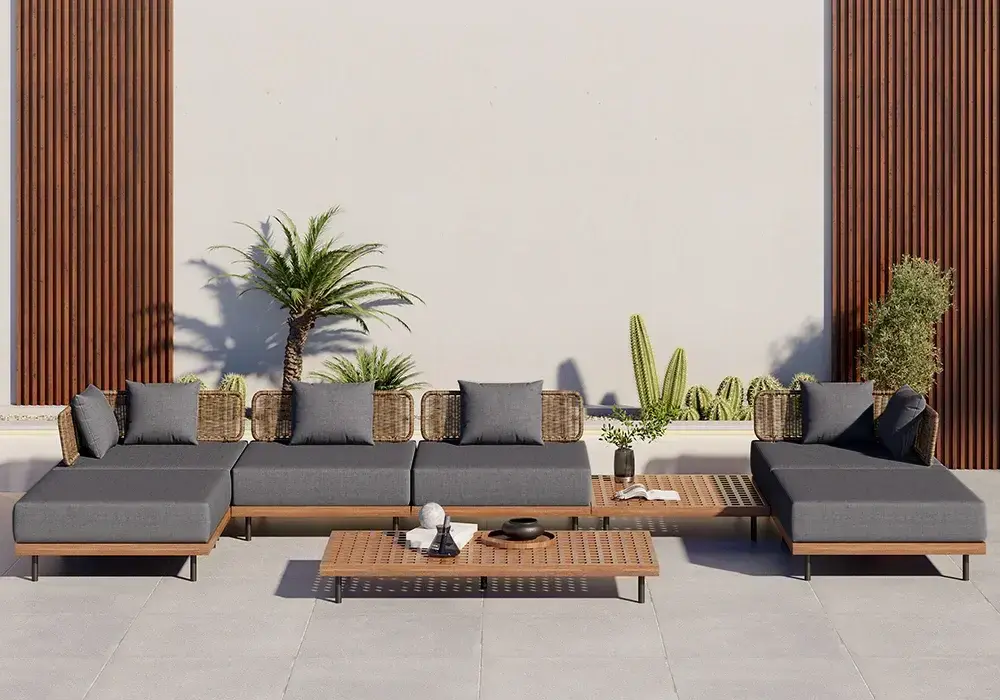
Looking for the ultimate lounge spot? Our 8-Piece Teak, Aluminum & Rattan Sectional Set is a Florida favorite. Crafted from robust teak and handwoven PE rattan, it's built to breathe and resist wear. The weather-resistant cushions are incredibly soft, and the versatile design lets you arrange your space exactly how you like it. Just set it up, sit back, and enjoy the breeze.
Tevara 7 Pieces Rectangle Teak & Aluminum Outdoor Patio Dining Set for 6 People
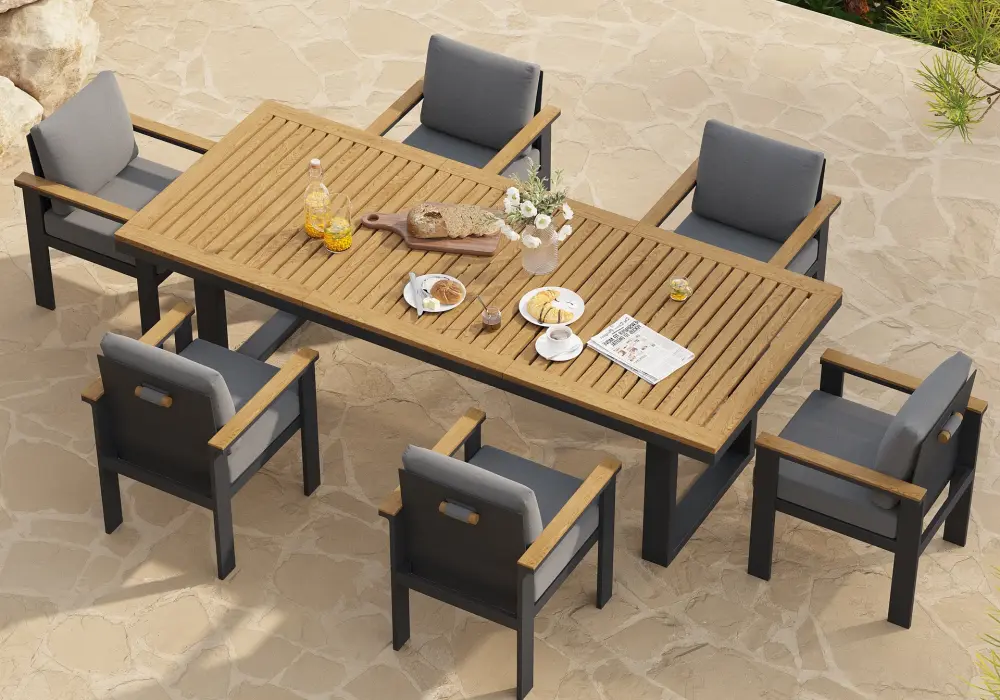
Another option is the Tevara 7 Pieces Rectangle Teak & Aluminum Outdoor Patio Dining Set for 6 People. This sofa comes with six weather-resistant chairs and a teak wood tabletop with a rustproof aluminum frame to ensure ultimate durability. It's naturally moisture-resistant and waterproof, offering long-lasting beauty.
It also has a low-maintenance design with wipe-clean surfaces and brush-resistant materials. This means less upkeep and more relaxation.
2 Pieces Coastal Aluminum & Woven Rattan Outdoor Patio Dining Chair Set in Gray
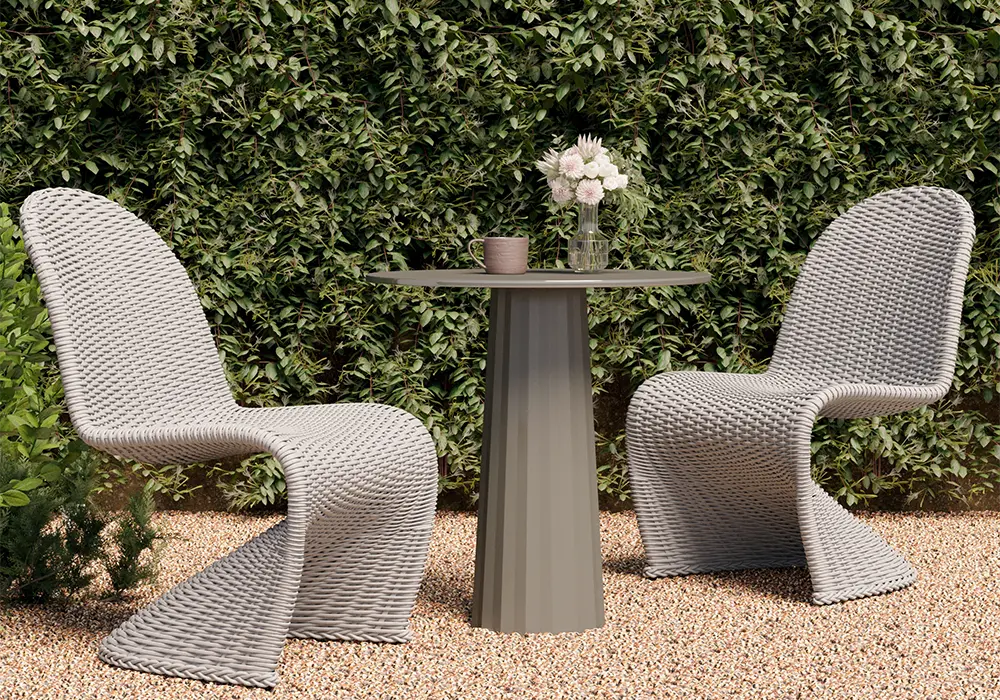
The 2 Pieces Coastal Aluminum & Woven Rattan Outdoor Patio Dining Chair Set in Gray is another great option for the Florida climate. This set is made of high-quality woven rattan that can resist harsh weather year-round.
Aluminum & Rattan Outdoor Patio Dining Armchair Chair in White & Khaki (Set of 2)
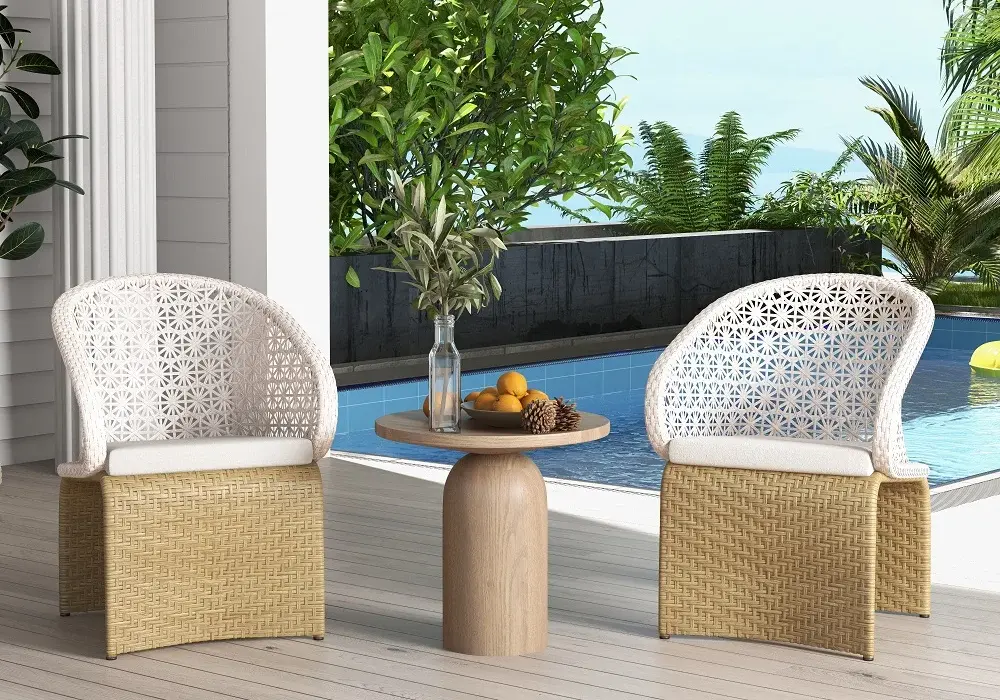
Another option is our Aluminum & Rattan Outdoor Patio Dining Armchair Chair in White & Khaki (Set of 2). This combines both aluminum and rattan, which are both well known for resisting harsh weather, as discussed above. Both chairs come fully assembled and are ideal for enjoying a morning coffee or an evening cocktail.
Tevara Teak & Aluminum Outdoor Lounger Chair Patio Furniture in Warm White Cushion
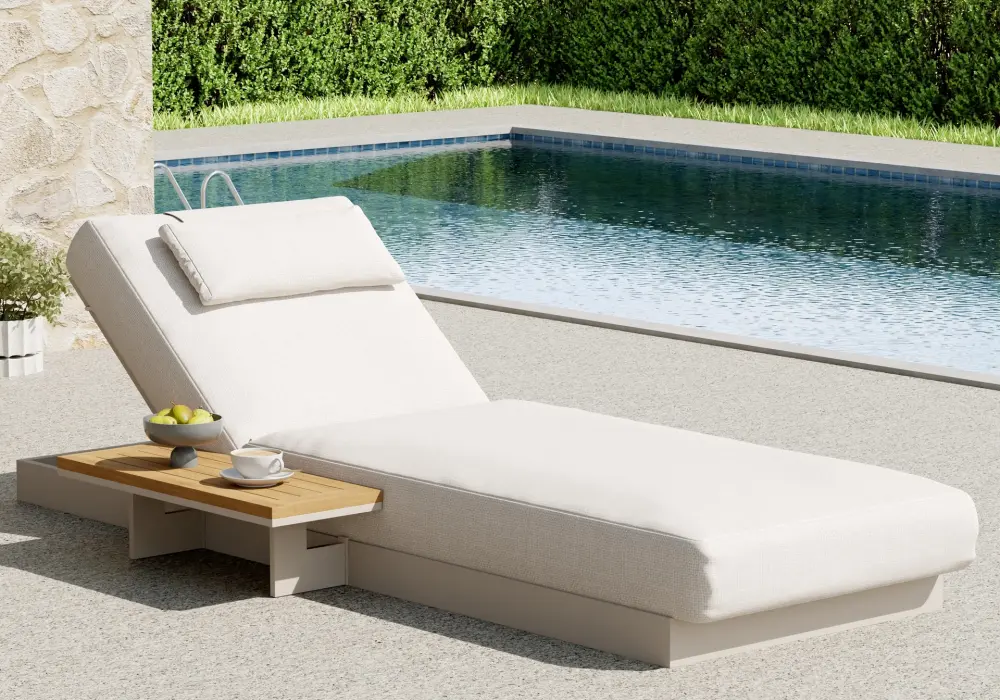
Finally, for those long afternoons in the sun, there's the Tevara Teak & Aluminum Lounger. It features premium FSC-certified teak and a weather-ready frame. The extra-thick 7.5-inch cushions provide superior comfort, making it the perfect spot for a weekend nap.
The extra thickness of the cushions is important because it means less direct pressure on the fabric over time. If the cushion is getting near-daily UV exposure for half the year, then this additional protection is critical.
FAQs
Should you bring outdoor furniture inside for hurricane season?
Generally speaking, you should have somewhere to store outdoor furniture inside for hurricane season, especially light pieces. Florida's official Atlantic hurricane season runs from June 1 through November 30, and the wind can pick up any of your outdoor furniture and use it as projectiles against your home or other parts of your neighborhood. Heavier sets like full teak and aluminum dining sets are more stable during this period, but they can still be moved under cover if you have the option.
How much does Florida's sun actually affect outdoor cushions?
More than most people expect. Surface-died fabrics can visibly fade within a season or two under Florida's UV levels, while solution-dyed fabrics — where the color is mixed into the fiber itself — hold their color substantially longer under the same conditions.
Will natural rattan or wicker furniture survive Florida's humidity?
Unfortunately, natural rattan and wicker furniture won't survive Florida's humidity for very long. It would be unusual to get three or four good seasons out of these materials. Synthetic resin wicker woven over aluminum frames is a better option for Florida's climate.
Do I need to buy furniture made of different materials if I live near the coast?
Definitely. If you're right on the water, you'll want marine-grade materials to fight off salt corrosion. High-quality powder-coated aluminum, synthetic resins, and durable plastics are your best bets for staying rust-free and stylish by the coast.
Are outdoor furniture covers necessary in Florida?
While high-quality materials like powder-coated aluminum and solution-dyed fabrics are built to withstand Florida's climate, using furniture covers is a great way to extend their lifespan. Covers protect your pieces from dirt, pollen, and debris, and they help keep your cushions dry during the frequent summer rainstorms, which cuts down on cleaning time and keeps everything looking brand new.