

Finding a genuinely high-quality reclining sofa with lumbar support in 2026 should be easy, but which size and style should you get, and how should you use these sofas?
This guide is designed to help you navigate your options. We explore the best reclining sofa with lumbar support products for this year. We also look at some top products from Homary, and how to match support to your size, style, and use case.
So, let’s dive in, shall we?
Source Homary
What does “lumbar support" really mean on a reclining sofa?
Lumbar support is important in any chair because of the shape of your lower back. This area, known as the lumbar region, curves slightly inward. When you sit down without any support behind it, gravity pulls your pelvis backward and the curve flattens out. When this happens, your lower back becomes rounded instead of maintaining its natural arch, which can lead to discomfort.
Fortunately, a chair or sofa with lumbar support stops this from happening. It actively fills in the gap behind your lower back so that the inward curve isn't lost when you sit down, like it would be if you were resting against a perfectly flat surface.
It's worth pointing out that the concept here hasn't been invented by furniture manufacturers. The U.S. Occupational Safety and Health Administration says that proper lumbar support is core to all of its seating guidance, especially if you're planning on sitting down for an extended period. A backrest that conforms to your spine's natural shape is a great option to help assist your back muscles and help you remain upright. For more information on maintaining a healthy back, you can also consult resources on lower back pain from the U.S. National Library of Medicine.
The lumbar spine comprises five vertebrae, and these are the largest bones in the spinal column. They also carry the vast majority of your weight while you are in a seated position because they are lower down and closer to your tailbone. This is why the lumbar region is the first area that can cause problems if the seating is not appropriate for the length of time they are sitting down.
Fortunately, none of this means that sofas need to look clinical or feel like a hospital chair. All they need is a proper backrest and support in the lower spine area.
How reclining sofas handle lumbar support
Source Unsplash
Built-in contouring and shaping
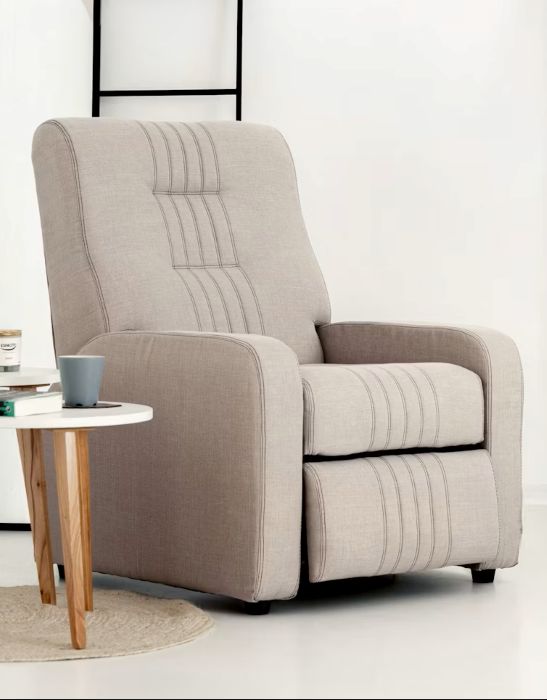
The most common approach is built-in contouring and shaping. The frame and foam that comprise the backrest are shaped specifically to contour to the curvature of the average person's back. This means that when you sit up against it, it naturally pushes out the lower back, preventing it from becoming flattened in the wrong way. Sometimes you can't always adjust this type of contouring and shaping, so it's often worth testing fixed lumbar support sofas like this in person to guarantee that they provide adequate comfort.
Adjustable lumbar mechanism
On rare occasions, you will also find recliner sofas with adjustable lumbar mechanisms. These allow you to firm up the support they offer to match your spine-specific requirements. Usually, you'll only find this option on premium office chairs or recliners with small dials determining how far the lower back area pushes forward or backward during adjustment.
Add on lumbar pillows
Lastly, manufacturers get around lumbar support issues by using add-on lumbar pillows. These are the simplest and most universal fix. All these require is a well-placed pillow behind your lower back to approximate what a built-in system does. Sometimes you may prefer this option because it allows you to adjust the size of the pillow to get something that fits you perfectly. Other times, you might prefer the built-in version instead because it's more convenient.
Seat depth and cushion firmness: Variables that most recliner sofa buyers overlook
Most of the online attention to reclining sofas so far has been focused on lumbar support and backrest shape. If you want the best experience, you might also want to consider seat depth and cushion firmness. These variables also determine your comfort levels.
What do we mean by seat depth?
Seat depth is the distance from the front edge of the seat cushion to the base of the backrest. If this distance is too long for your body, you either sit all the way back so your knees don't reach the edge of the sofa, or you sit forwards, which pulls your lower back away from the support it needs.
This is why it's so critical to have a seat depth that's just right. When that happens, the backrest will actually be able to do its job.
What do we mean by cushion firmness?
Cushion firmness works in a similar way. If cushions are too soft, then your hips will sink lower than your knees and rotate your pelvis backwards, flattening out your lower back. When this happens, it undermines any lumbar support that might be operating on the reclining sofa.
The best option is to go for a medium-firm cushion that keeps your pelvis level and to keep checking the shape your lower back makes when you rest against it.
This is one of the reasons why two identical sofas with the same backrest contours can feel different. The cushion firmness and seat depth can change the biomechanics of the human body in a seated position, preserving spinal contouring in one situation and not in the other.
Headrest support and recline angle: How do they relate to the lower back?
You may be wondering how headrest support and recline angle relate to the lower back. Most ergonomics professionals will tell you that the headrest area is a separate feature from lower back comfort, but in reality, your spine works as one connected chain instead of a stack of independent parts. Comfort issues with the head and neck area can transmit to the lower body as well. The American Chiropractic Association provides further guidance on ergonomics and sitting to help prevent such issues.
For example, if you're leaning forward because your headrest doesn't reach your body height, it can change the upper spine's position and cause more weight to travel down to your lower spine, increasing strain.
Reclining angle can also make a difference. When reclining sofas lean back further, body weight shifts from the hips to the backrest.
Most people find this comfortable for their lower backs, which is why recliner sofa orders are exploding all around the country. If you recline too far in a sofa with a thin backrest, it can cause the lower back to round out into the cushion instead of resting against a supportive curve.
Again, this comes back to the seat depth issue. The lower back rounds out because the position of other critical parts of the body has changed.
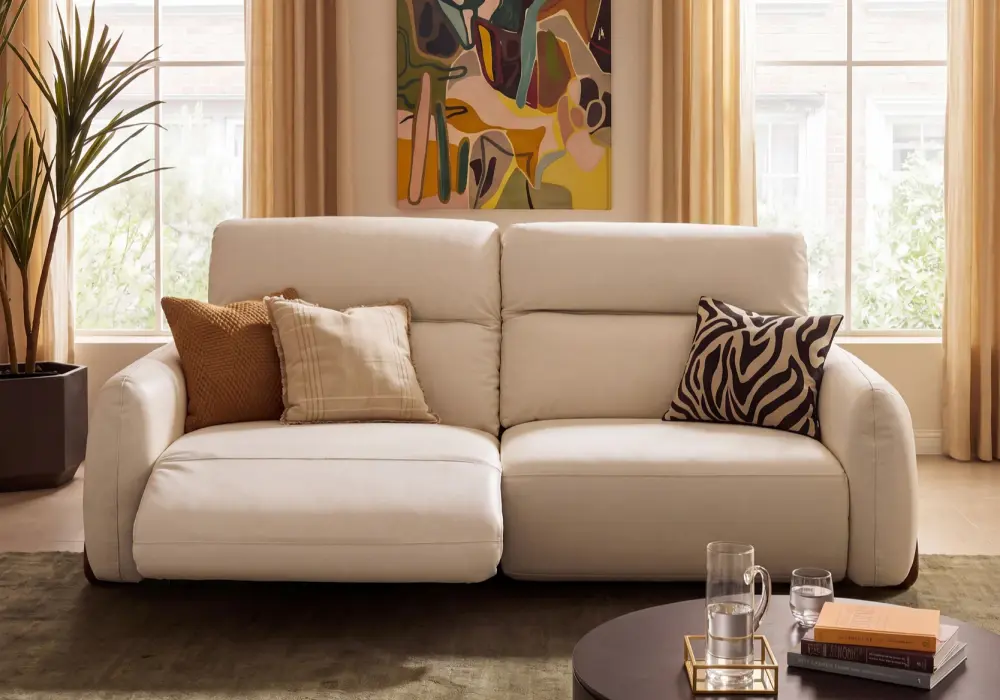
Fortunately, sofas with a motorized recline and independently adjustable headrest, like the Curva 85" Genuine Leather Power Reclining Sofa with Adjustable Headrest solve this problem. Being able to fine-tune the angle of your head and level of support in any recline position provides another degree of freedom that makes it easier to achieve genuinely functional ergonomics.
Lumbar support features comparison
Let's take a look at a comparison between various lumbar support features. We document some of the real differences in backrest shape, adjustability, and recline mechanisms, and the effects that they have when supporting your lower back in real-life seating situations:
Sofa | Backrest & Adjustability | Recline Mechanism | Best For |
High-resilience foam cushioning; manually adjustable headrest, independent of recline | Power (motorized), one reclining seat | A dedicated single recliner spot where fine-tuning headrest angle at any recline position matters most | |
Thicker upholstery with a curved, ergonomically shaped backrest; soft back cushions | Manual reclining backrest | A shared family sofa that wants extra cushioned backrest support without a full recliner mechanism | |
Rotatable, adjustable backrest via telescoping rails; foam cushions | Manual, multi-position (also converts to a queen bed) | A guest room or flex space where sleeping function matters as much as seated support | |
Precision-engineered backrest and seat frame rotate 90°; 3-level adjustable armrests | Manual, highly adjustable | Shoppers who want to experiment with backrest and armrest position to dial in their own supported angle |
Best reclining sofa with lumbar support options
Here are some of the best reclining sofas with lumbar support options from our collection at Homary:
2-Piece Yarn-Dyed Fabric and Faux Leather Reclining Sectional Sofa
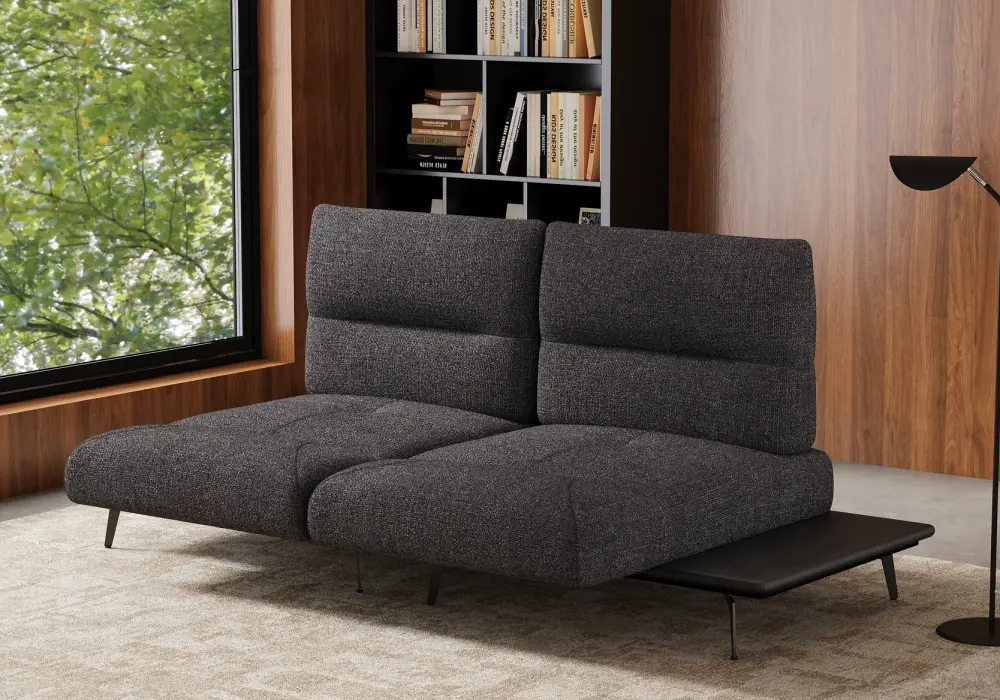
Our 2-Piece Yarn-Dyed Fabric and Faux Leather Reclining Sectional Sofa is a great option for anybody looking for superior support. This has an adjustable backrest and seat frame that rotates 90° for customized lounging and reclining support. There are three level-adjustable armrests for tailored relaxation, and a 6-inch elevated metal leg design for a sleek, airy aesthetic.
Modern 84" Queen 3-Seater Linen Convertible Sleeper Sofa with Adjustable Backrest
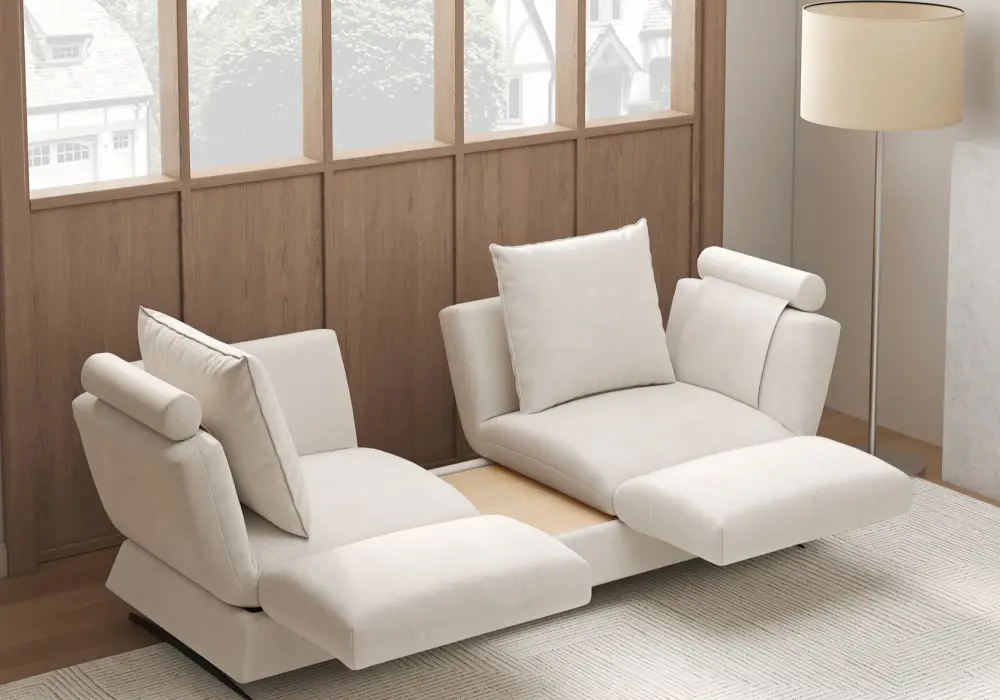
You may also want to explore our Modern 84" Queen 3-Seater Linen Convertible Sleeper Sofa with Adjustable Backrest. This is a flexible, modular solution for small living areas and features matching ottomans for extended lounging space. The best thing about this particular product is its independent adjustable backrests. These provide you with multiple options for lumbar support.
109.4" Modern White Leath-Aire 3 Seater Deep Sofa with Adjustable Backrest Sailboat
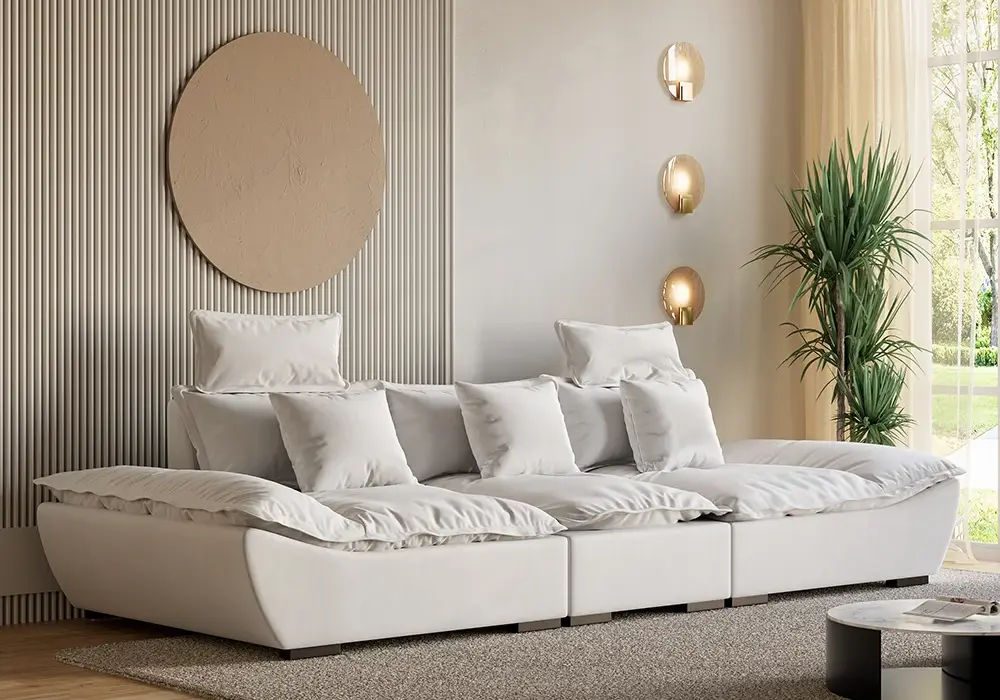
Another option is our 109.4" Modern White Leath-Aire 3 Seater Deep Sofa with Adjustable Backrest Sailboat. This attractive piece of furniture, ideal for living rooms, has a sailboat curve design and reclining backrest with pillows included. It's specifically designed to be wipe-cleanable by wiping it with a damp cloth, and the ability to manipulate the cushions makes all the difference.
Curva 85" Genuine Leather Power Reclining Sofa with Adjustable Headrest
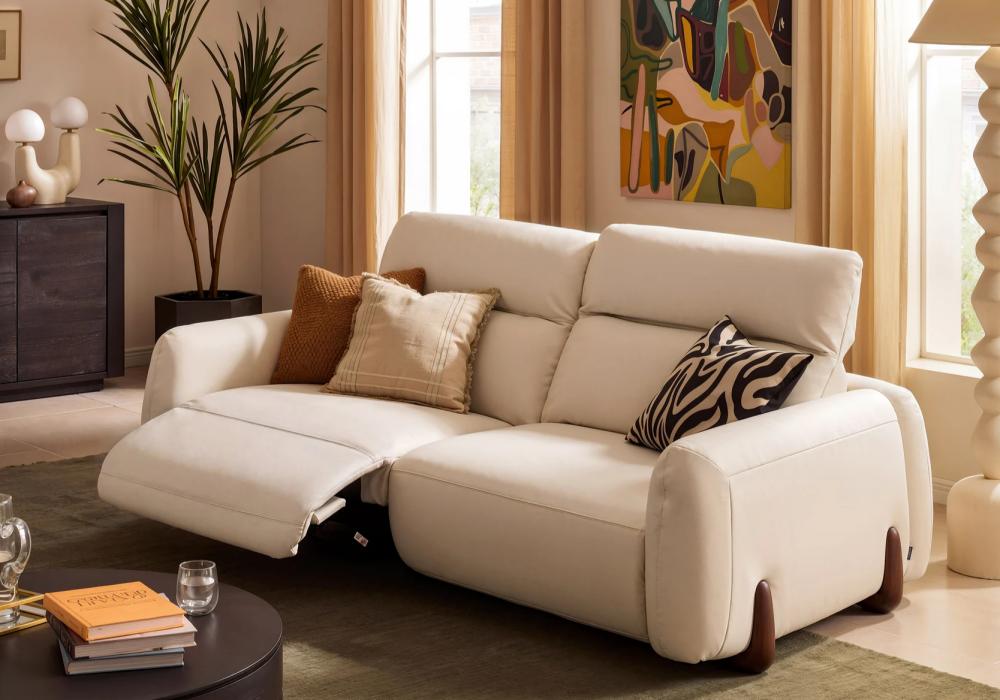
Finally, consider the Curva 85" Genuine Leather Power Reclining Sofa with Adjustable Headrest. This sofa comes in two-seater and three-seater options and features power reclining seats and manually adjustable headrests. Comfort comes from the high-resilience foam cushions and underlying structural support.
Matching support to your size, style, and use case
The level of support you get from a reclining sofa depends on your site style and use case. If you want a dedicated spot that is built for long-sitting sessions (like working on the couch or unwinding after a long day), then Curva 85-inch Genuine Leather Power Reclining Sofa might be a good option. It gives you more control over your seated position than just about anything else.
Meanwhile, if your priority is a full sofa everyone in the household can share, then you might want to go for Leath-Aire 3 Seater Deep Sofa. With this option, you're trading motorized precision for lumbar support that's built into the shape of the sofa and the cushions themselves. It's a low-tech solution, but it's still highly effective.
If you need your sofa to function as a temporary guest bed, then you might want to look at the Modern 84" Queen 3-Seater Linen Convertible Sleeper Sofa with Adjustable Backrest. Again, this option is perfect if you need a flexible space in your home that can be both a sitting room and a bedroom, depending on your requirements.
FAQs
Do reclining sofas need dedicated lumbar support to be considered good for your back?
Not necessarily. While dedicated lumbar support is preferred, many reclining sofas deal with this problem passively via shape or cushion firmness. Even if they don't actively call out the fact that they have lumbar support, they often do.
What's the difference between seat depth and cushion firmness for back comfort?
Seat depth determines whether your lower back can reach the backrest at all without your legs dangling or your knees pressing the edge. Cushion firmness determines whether your hips stay level once you're sitting there, or whether you sink into a slouched position. You need both to be right for a supportive backrest shape to actually do its job.
Can headrest position affect lower back comfort?
Yes, absolutely. You'll need to consider the headrest position of any reclining sofa with lumbar support that you buy. If your upper back weight is directly over your lumbar region, it can increase pressure, especially during long sitting sessions.
Are manual recliners or power recliners better for lumbar support?
Neither mechanism really dominates here. What matters is the backrest shape. Any backrest should support the natural curvature of the lower spine to maintain comfort.