

If you've shopped for outdoor furniture, you've likely encountered two terms: PVC-coated polyester and vinyl fabric. Many articles treat them as competing materials, leaving consumers confused about which is "better." Here's the truth most guides won't tell you: PVC-coated polyester is technically a type of vinyl fabric. In outdoor furniture, the real comparison is usually between woven PVC-coated polyester mesh (used for sling chairs and breathable seating) and solid vinyl upholstery (used for cushions and high-moisture applications).
The difference isn't chemical—it's structural. This guide clarifies the terminology and helps you choose based on how the fabric is constructed and what you need it to do.
Table of Content
Quick Comparison: PVC-Coated Polyester Mesh vs. Solid Vinyl
Feature | PVC-Coated Polyester Mesh | Solid Vinyl Upholstery |
Structure | PVC-coated yarns woven into an open mesh | PVC/vinyl layer bonded to a fabric backing; solid, non-porous surface |
Breathability | High (air flows through) | Very low (non-breathable) |
Waterproofing | Water drains through; quick-drying | Surface is impermeable; fully waterproof |
Comfort (Heat) | Cooler; allows airflow | Can become hot; sticks to skin in summer |
Common Uses | Sling chairs, loungers, rocking chairs | Marine upholstery, bar stools, cushions, poolside seating |
Durability | Good; resists stretching and tearing | 3-7 years (can crack/peel) |
Cleaning | Easy with soap/water; dirt may get in holes | Wipe-clean surface; easiest to sanitize |
Lifespan | 5-10+ years (depending on quality) | 5-15 years (quality-dependent) |
Is PVC the Same as Vinyl?
The short answer is yes—but the terminology is inconsistent across the industry.
- PVC stands for polyvinyl chloride, a synthetic plastic polymer.
- Vinyl is the common shorthand for PVC in the textiles and furniture industry.
Manufacturers often use "vinyl fabric" as a broad commercial term. "PVC-coated polyester" is more specific: it describes the construction (a polyester base fabric coated with PVC).
One manufacturer notes: "A solid PVC coated polyester (a.k.a. vinyl) forms a solid barrier..." . This confirms that in many contexts, PVC-coated polyester and vinyl are the same material described differently. Therefore, comparing "PVC vs. Vinyl" can be misleading without specifying construction.
What Is PVC-Coated Polyester Fabric?
PVC-coated polyester is an engineered textile consisting of:
- Polyester Core Yarn: Provides high tensile strength, dimensional stability, and resistance to stretching.
- PVC (Vinyl) Coating: Protects the polyester from moisture, UV radiation, abrasion, and chemicals.
- Weave Structure: The yarns are woven into a fabric. For sling chairs, this is typically an open mesh weave that allows airflow.
Key takeaway: The "coating" is on the yarns before weaving. The final fabric is a mesh with gaps between the yarns, providing breathability.
Major sling fabric brands like Phifertex® and Textilene® are made from PVC-coated polyester yarns woven into mesh. Some premium options, like Sunbrella Sling, combine PVC-coated polyester with acrylic yarns for enhanced softness and comfort.
What Does Vinyl Fabric Mean in Outdoor Furniture?
In the outdoor furniture context, "vinyl fabric" generally falls into three categories:
Vinyl-Coated Polyester Mesh (Sling Fabric)
The same as described above. When a label says "vinyl sling fabric," it usually means PVC-coated polyester mesh.
Solid Vinyl Upholstery
This is a solid, non-porous sheet of PVC/vinyl bonded to a textile backing (like polyester or cotton). It has a continuous, closed surface, feels more like faux leather or plastic, and is completely waterproof.
Marine-Grade Vinyl
Engineered for harsh marine environments, this vinyl offers excellent UV resistance, anti-microbial properties, and resistance to cold-cracking.
Important Warning: Not all "vinyl fabric" is suitable for outdoor use. Check for terms like marine grade, UV-resistant, and outdoor-rated. Harsh cleaners and disinfectants may damage some vinyl formulations over time.
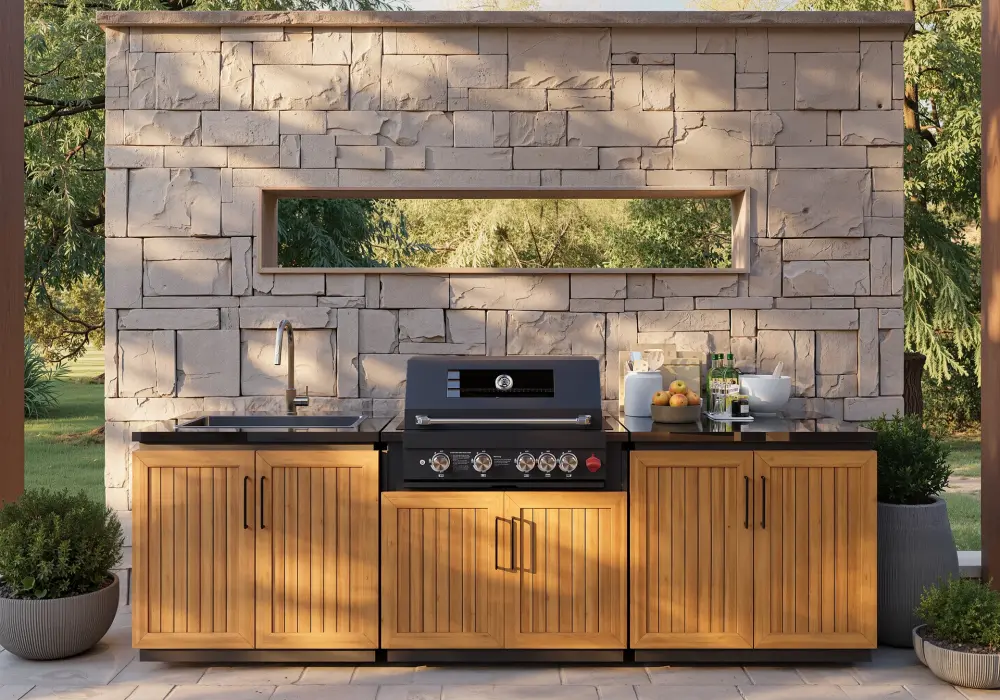
Homary Pick: Tevara Outdoor Kitchen Island 3-Piece Set
PVC-Coated Polyester Mesh vs. Solid Vinyl: Head-to-Head Comparison
Breathability and Heat
- Mesh: The open weave allows air to circulate, keeping seats cooler in direct sunlight. Ideal for hot, humid climates.
- Solid Vinyl: Non-breathable and can become uncomfortably hot, potentially sticking to skin.
Water Resistance and Drying
- Mesh: Water drains through the pores, and the material dries quickly. This "quick-dry" feature resists mildew.
- Solid Vinyl: Completely impermeable. Water beads up and rolls off. Excellent for high-spill areas.
Comfort
- Mesh: Provides firm, supportive seating with "give" from the tensioned weave.
- Solid Vinyl: Surface is less giving; requires cushioning or foam to be comfortable for seating.
Durability (UV, Weather, and Longevity)
- Mesh: High tensile strength and tear resistance. UV stabilizers prevent degradation, but prolonged sun exposure eventually degrades the coating. Lifespan: 5-10+ years.
- Solid Vinyl: Highly resistant to abrasion, chemicals, and UV. However, plasticizer loss over time leads to cracking and peeling. Lifespan: 3-7 years on average, though marine-grade can exceed this.
Cleaning and Mildew
- Mesh: Easy to clean with soap and water. However, dirt can become trapped in the mesh holes if not regularly brushed.
- Solid Vinyl: Wipes clean with a damp cloth; easiest to sanitize. Vinyl inherently resists bacterial growth.
Which Material Is Better for Each Type of Outdoor Furniture?
Your choice depends on the furniture piece and its intended use.
- Sling Chairs and Loungers:
- Best: PVC-Coated Polyester Mesh. Its breathability and quick-dry properties make it ideal for lightweight seating where comfort matters.
- Outdoor Rocking Chairs:
- Best: PVC-Coated Polyester Mesh. Often used for these designs due to the contoured support and airflow.
- Cushioned Patio Seating:
- Best: Solid Vinyl Upholstery for cushion covers (or solution-dyed acrylic for high heat, if breathability is prioritized). Vinyl provides waterproofing and easy cleaning.
- Poolside Furniture:
- Best: Both work. Mesh offers quick-dry comfort; solid vinyl offers sanitary, wipe-clean surfaces. Marine-grade vinyl is excellent for harsh, chemical exposure (chlorine).
- Furniture Covers:
- Best: PVC-coated Polyester. It is tough, waterproof, and UV-resistant, but lightweight enough to handle.
- Commercial or Coastal Furniture:
- Best: Marine-grade Solid Vinyl. Its resistance to harsh disinfectants and salt air makes it durable. Mesh is also suitable for sling seating if breathability is key.
What to Check Before Buying
Look beyond the label "vinyl" or "PVC-coated." Check for these details:
- Outdoor/Marine Grade: Is it rated for outdoor use?
- UV Resistance: Is it treated to resist fading?
- Cold-Crack Resistance: Critical if you live in freezing climates (premium vinyls are treated).
- Mesh Density: For sling chairs, tightly woven mesh lasts longer.
- Polyester Yarn Strength: Higher denier (like 600D) means more durability.
- Mildew Resistance: Essential for humid climates.
- Warranty: Provides insight into the expected lifespan. Sunbrella Sling offers a 5-year warranty.
- Replacement Sling Availability: If you choose a mesh chair, is replacement fabric available for when it eventually needs replacing?
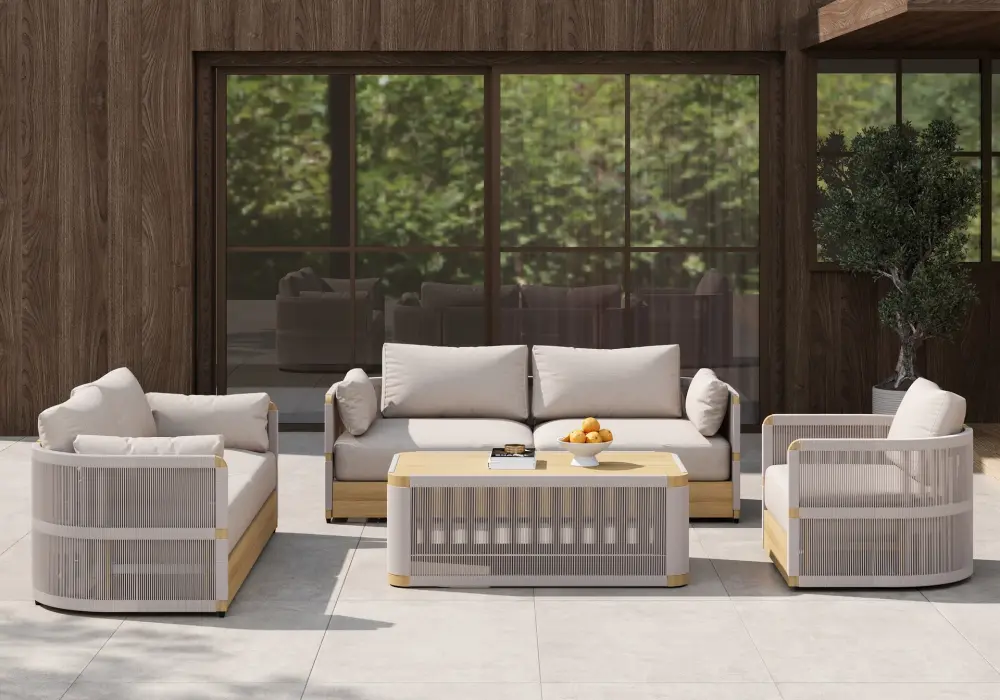
Homary Pick: 4-Piece Outdoor Rope Weave Swivel Sofa Set
Final Verdict
There is no single "best" material. The choice is between structure and application.
- Choose PVC-coated polyester mesh if you need breathability, quick-drying, and a cool seating surface—perfect for sling chairs and loungers in hot climates.
- Choose solid vinyl upholstery if you need complete waterproofing, supreme stain resistance, and easy sanitization—ideal for cushions, marine environments, and high-traffic commercial use.
When a product label only says "vinyl fabric," investigate further: Is it a breathable mesh or a solid upholstery vinyl? Understanding this distinction will ensure you choose the right material for lasting comfort and durability.
FAQ
Q: Is PVC-coated polyester the same as vinyl? A: Yes, in many contexts. "Vinyl" is a common name for PVC, and PVC-coated polyester is often called "vinyl-coated polyester." The terms are frequently used interchangeably.
Q: Which is more durable, PVC-coated polyester or vinyl? A: Solid, marine-grade vinyl typically lasts 5-15 years with minimal maintenance . PVC-coated polyester mesh generally lasts 5-10 years but is highly resistant to tearing and stretching.
Q: Which is better for hot, sunny climates? A: PVC-coated polyester mesh is better because it is breathable, allowing air to circulate and keeping the seat cooler. Solid vinyl can become uncomfortably hot in direct sunlight.
Q: Which fabric is easier to clean? A: Solid vinyl is easier to clean. It has a non-porous surface where you can simply wipe away spills, dirt, and even disinfectants.
Q: What does "PVC-coated" mean for sling chairs?
A: It means the yarns in the fabric have a protective PVC layer. This adds durability and weather resistance while the woven mesh structure provides breathability and flexible support.