

High-quality teak outdoor furniture typically lasts 30 to 50 years or more. Premium pieces can last even longer, but actual lifespan depends on teak quality, construction, climate, and care. Understanding these variables explains why some sets last for generations while others show premature wear.
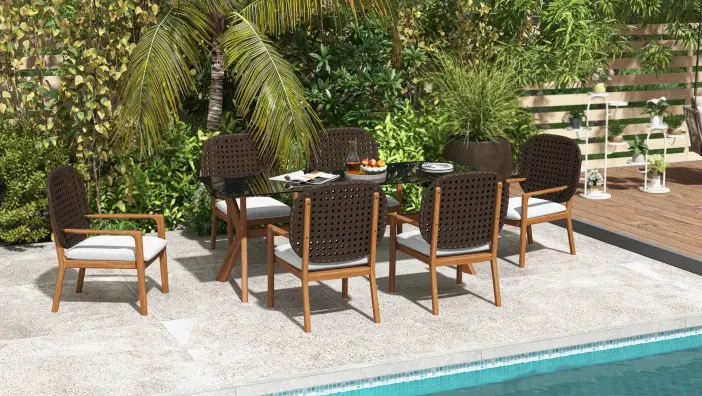
Source Homary — Teak Wood Outdoor Dining Set
Table of Contents
How Long Does Teak Outdoor Furniture Last?
When asking how long teak outdoor furniture lasts, the answer is impressively long compared to most other outdoor furniture materials. High-quality teak furniture, constructed from Grade A teak heartwood with proper joinery and stainless steel hardware, routinely achieves a 30- to 50-year outdoor lifespan. Premium pieces in moderate climates can easily surpass 50 years.
Teak's exceptional longevity stems from its biological properties—natural oils and dense grain structure that resist moisture, decay, and insect damage. However, it's important to distinguish between the wood's potential lifespan and the furniture's actual lifespan. While teak heartwood can endure for many decades, furniture longevity also depends on construction quality, joint integrity, hardware corrosion resistance, and exposure conditions. A poorly constructed piece with inferior joinery will fail long before the wood deteriorates, regardless of teak's inherent durability.
The following lifespan ranges provide general benchmarks, not guarantees, as actual results vary considerably by quality, climate, and care:
Teak Furniture Quality / Condition | Potential Outdoor Lifespan |
High-quality teak, well constructed | 30–50+ years |
Premium teak with good care | Several decades or longer |
Poor-quality teak / weak construction | Significantly shorter |
What Makes Teak Outdoor Furniture So Durable?
Teak's extraordinary outdoor durability comes from a combination of biological characteristics that make it uniquely suited for exterior use.
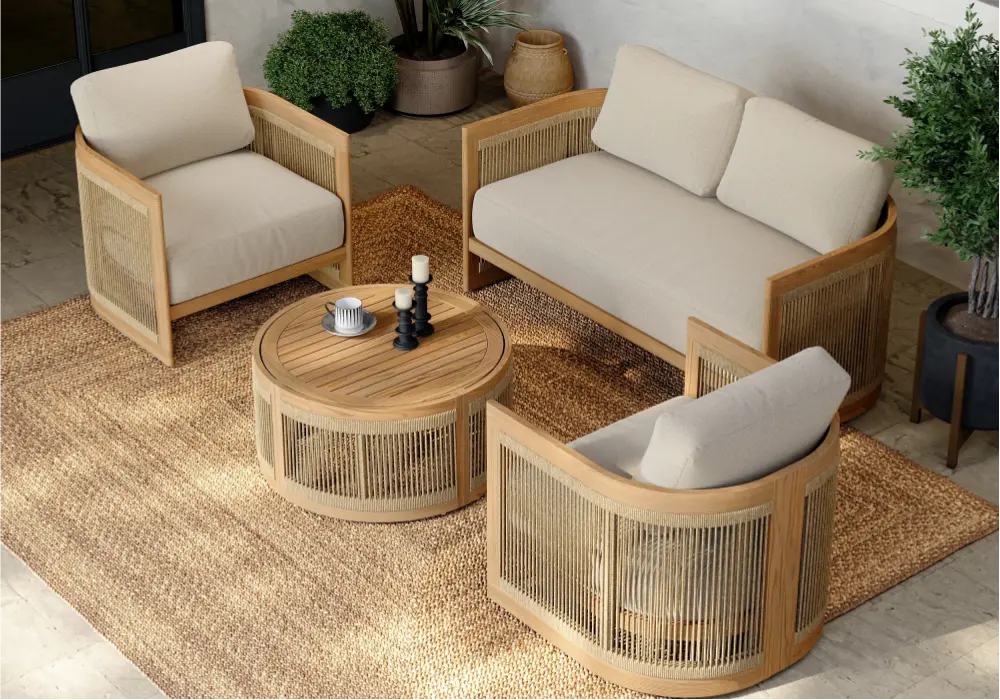
Source Homary — Outdoor Teak & Rope Weave Sofa Set
Natural Oils
Teak naturally produces high concentrations of oily resins that act as built-in preservatives. These oils provide exceptional moisture resistance by preventing water penetration into the wood's cellular structure. Unlike many other woods that require chemical treatments to achieve weather resistance, teak's natural oils offer inherent protection against rain, humidity, and changing weather conditions.
Dense Grain
Teak features an exceptionally tight, dense grain structure with minimal porosity. This density reduces the wood's ability to absorb water, minimizing the expansion and contraction that cause warping, cracking, and splitting in less stable woods. The dense grain also contributes to teak's strength and resistance to physical wear.
Moisture and Weather Resistance
The combination of natural oils and dense grain creates outstanding moisture resistance. Teak performs well in humid tropical environments, rainy climates, and areas with significant seasonal weather changes. The wood's stability in fluctuating conditions reduces the stress on joints and connections that often cause furniture failure.
Resistance to Insects and Decay
Teak's natural oil content and dense composition make it unpalatable to wood-boring insects and resistant to fungal decay. This resistance extends the wood's useful life in outdoor environments where other woods would quickly succumb to rot or insect damage.
Durable Outdoor Construction
While teak wood is inherently durable, furniture lifespan depends heavily on construction quality. Premium teak furniture uses mortise-and-tenon joinery, secure wooden pegs or stainless steel hardware, and design features that promote water drainage and minimize moisture trapping.
What Factors Affect the Lifespan of Teak Outdoor Furniture?
While teak itself is highly durable, the actual lifespan of teak outdoor furniture depends on several interconnected factors:
- Teak quality and grade – Grade A teak heartwood offers superior durability compared to lower grades or sapwood material
- Heartwood vs. lower-quality material – Heartwood contains the natural oils that provide weather resistance; sapwood lacks these protective properties
- Furniture construction – Poor joinery or weak structural design will fail long before the wood deteriorates
- Joinery and hardware – Non-stainless steel hardware can corrode, compromising structural integrity
- Climate – Extreme conditions such as intense UV exposure or freeze-thaw cycles can accelerate weathering
- Direct sunlight – Prolonged UV exposure causes the golden-brown color to fade to silver-gray
- Rain, snow, and humidity – While teak resists moisture, standing water can accelerate deterioration
- Standing water – Water trapped in crevices can promote mildew growth and soften the wood
- Cleaning and maintenance – Appropriate care helps maintain appearance and identify potential issues early
- Frequency of use – Regular use, especially heavy commercial use, may accelerate visible wear
Factor | Effect on Lifespan | What to Do |
Teak quality | High | Choose high-quality teak with predominantly heartwood |
Climate | High | Consider local weather exposure |
Standing water | Negative | Improve drainage and avoid trapping moisture |
Direct sun | Moderate | Accept natural weathering or use appropriate protection |
Construction | High | Choose quality joinery and stainless steel hardware |
Maintenance | Moderate | Clean appropriately and inspect regularly |
Does Teak Outdoor Furniture Need Maintenance?
Teak furniture requires less maintenance than many other outdoor woods, but the level of care you choose depends on your aesthetic preferences rather than structural necessity.
Option 1: Let Teak Weather Naturally
Teak's golden-brown color gradually develops into a silver-gray patina through natural weathering and oxidation. This gray coloration is a normal, cosmetic change that does not indicate structural damage. Choosing this option requires minimal routine maintenance—occasional cleaning to remove dirt and debris is typically sufficient. This is generally the lowest-maintenance aesthetic approach.
Option 2: Maintain the Golden-Brown Color
If you prefer teak's warm golden-brown appearance, more regular maintenance is required. This typically involves periodic cleaning and the application of teak-specific cleaners or conditioners. Surface preparation may be necessary to ensure consistent results. Always follow the furniture manufacturer's specific recommendations for cleaning and maintenance products.
Important distinction: Maintaining appearance is different from preserving structural durability. Teak does not require routine application of sealers or oils to remain structurally sound. In fact, many teak experts and manufacturers caution against applying teak oil, as it can create a surface film that traps dirt and promotes mildew growth, ultimately requiring more intensive restoration later.
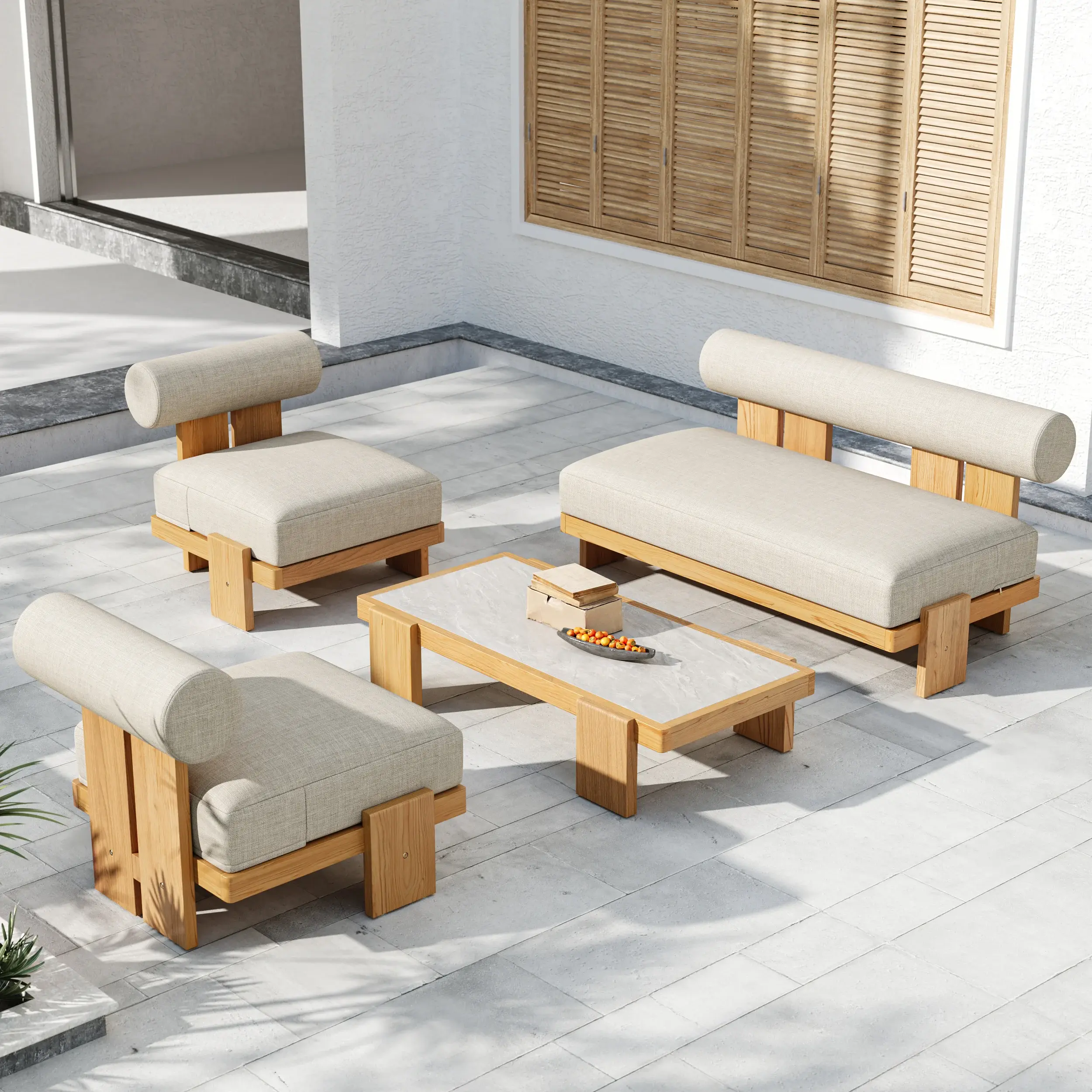
Source Homary — Outdoor Teak Sofa Set with Coffee Table
Does Gray Teak Mean the Furniture Is Deteriorating?
No. Silver-gray teak is usually the result of natural surface weathering and oxidation, not structural deterioration.
When teak furniture is exposed to sunlight and weather, the surface naturally fades from golden-brown to a soft silver-gray. This color change is purely cosmetic and does not affect the wood's strength, durability, or resistance to decay. In many parts of the world, the silver-gray patina is actually considered a desirable characteristic that gives teak furniture a distinguished, weathered appearance.
When to be concerned: Structural warning signs include deep cracks, severe splitting, loose or failing joints, damaged hardware, unstable construction, or sections of wood that feel soft or spongy. These issues require attention regardless of the wood's color. Regular inspection helps distinguish between harmless surface weathering and genuine structural concerns.
How Can You Extend the Life of Teak Outdoor Furniture?
These practical steps help maximize the outdoor lifespan of your teak furniture:
- Clean teak appropriately – Use mild soap and water with a soft brush for routine cleaning; avoid harsh chemicals
- Prevent standing water – Ensure water drains freely from flat surfaces and crevices
- Keep drainage paths clear – Remove leaves and debris that can trap moisture
- Inspect joints and hardware – Regularly check for loose connections or rust on hardware
- Address cracks or structural problems early – Small issues are easier to repair than major failures
- Use covers strategically in harsh conditions – Protective covers can help reduce weathering in extreme climates
- Follow manufacturer recommendations – Each manufacturer may have specific care guidelines
- Avoid unnecessary harsh chemicals – Bleach, ammonia, and aggressive solvents can damage teak
- Avoid aggressive pressure washing – High pressure can damage the wood surface and force moisture into the grain
- Store or protect furniture appropriately – When extreme weather such as severe storms or heavy snow is anticipated
How Long Does Teak Furniture Last Compared With Other Outdoor Materials?
Teak offers exceptional longevity compared with most other outdoor furniture materials, but each material has different strengths and trade-offs:
Material | Typical Outdoor Lifespan | Maintenance | Weather Resistance |
Teak | 30–50+ years | Low–Moderate | Excellent |
Acacia | 5–15 years | Moderate–High | Good |
Eucalyptus | 5–15 years | Moderate | Good |
Cedar | 10–20 years | Moderate–High | Moderate |
Aluminum | Often decades | Low | Excellent |
Wrought iron | Often decades | Moderate | Excellent (with finish) |
Plastic/polymer | 10–20+ years | Low | Varies |
These are typical lifespan ranges and can vary substantially by quality, climate, construction, and finish.
Is Teak Outdoor Furniture Worth the Investment?
For many homeowners, teak outdoor furniture represents excellent long-term value despite its higher upfront cost. The cost per year of ownership calculation often favors teak because it can last several decades while maintaining its appearance and structural integrity.
Consider the value proposition: a high-quality teak dining set that costs $3,000 and lasts 40 years has an annual cost of just $75 per year. A cheaper set costing $600 that needs replacement every 5 years costs $120 annually and requires more frequent hassle and disposal.
Additional value factors include teak's timeless aesthetic appeal, repairability (damaged sections can often be sanded or replaced), low routine maintenance requirements, and reduced replacement frequency. For those who value long-lasting, beautiful outdoor furniture with minimal ongoing effort, teak is generally a sound investment.
Key Takeaways
- High-quality teak outdoor furniture can last 30–50+ years with proper construction and care.
- Teak's natural oils and dense grain provide outstanding moisture resistance, insect resistance, and weather durability.
- Gray teak is generally a normal weathering process and does not indicate structural deterioration.
- Maintenance is primarily about appearance rather than structural necessity—teak doesn't require oiling or sealing to remain durable.
- Construction quality, climate, drainage, and hardware significantly affect the overall furniture lifespan.
- Proper care—including regular cleaning, inspection, and addressing issues promptly—can, can help maximize the furniture's useful life.
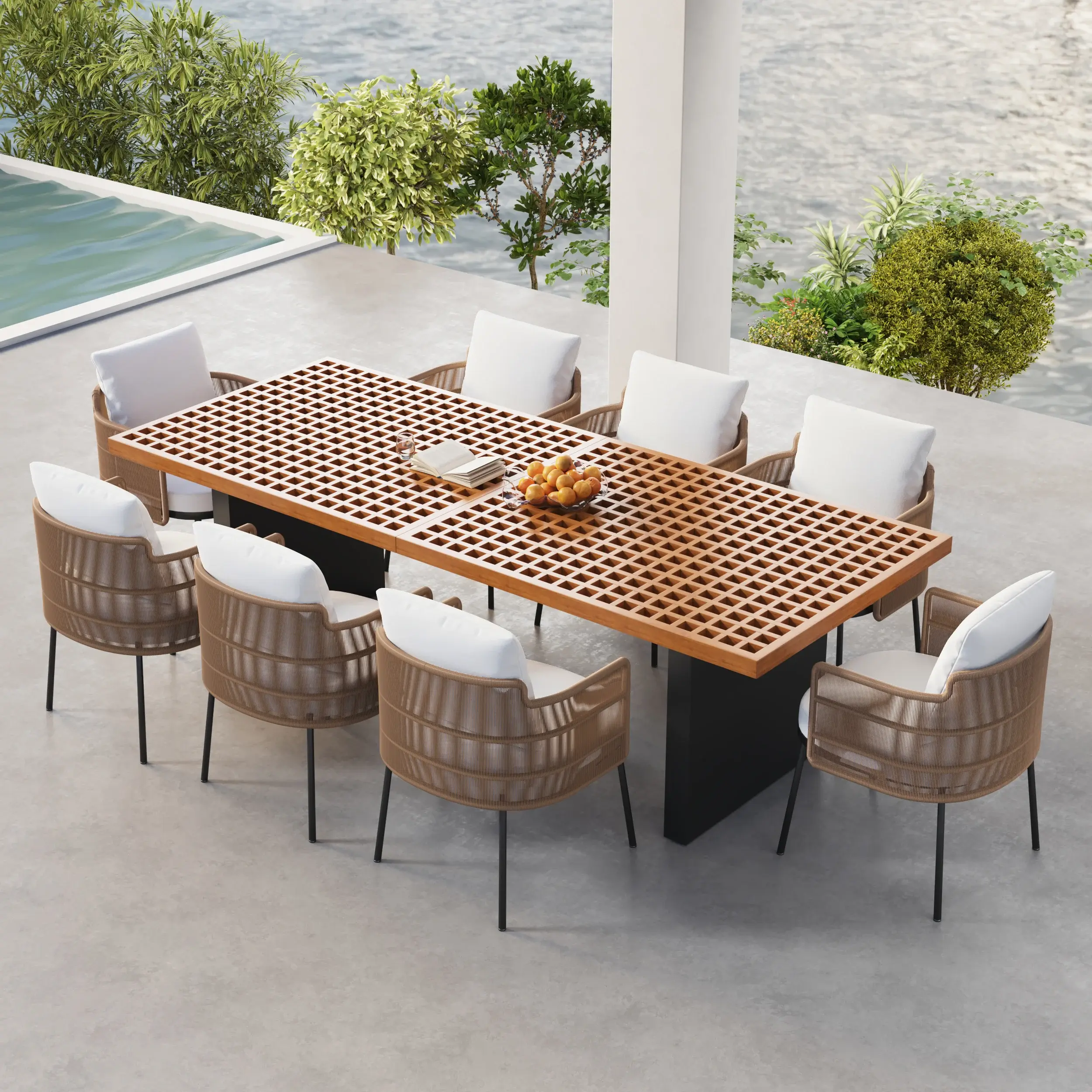
Source Homary — Outdoor Teak & Resin Rattan Rectangular Dining Set
Frequently Asked Questions About Teak Outdoor Furniture
How long does teak outdoor furniture last?
High-quality teak outdoor furniture typically lasts 30 to 50 years outdoors, with premium pieces potentially exceeding 50 years. Actual lifespan depends on teak quality, construction, climate, and maintenance.
Can teak furniture stay outside all year?
Yes, teak furniture is specifically designed for outdoor use and can remain outdoors year-round. Teak's natural oils and dense grain make it highly resistant to rain, snow, humidity, and temperature fluctuations. Proper drainage and periodic cleaning help ensure long-term durability.
Does teak furniture need to be covered?
Teak furniture does not require covering for protection, as it is naturally weather-resistant. However, covers can reduce weathering and help maintain the golden-brown appearance longer. If using covers, ensure adequate airflow to prevent trapped moisture that could promote mildew growth.
Does teak furniture turn gray?
Yes, teak furniture naturally turns silver-gray over time when exposed to sunlight and weather. This color change occurs through surface oxidation and is a normal weathering process. The gray patina is purely cosmetic and does not indicate deterioration or reduced durability.
Is gray teak still durable?
Yes, gray teak remains fully durable. The silver-gray color is a surface-level change that does not affect the wood's structural integrity, strength, or resistance to decay. The natural oils and dense grain that make teak durable remain intact beneath the weathered surface.
Does teak furniture need to be oiled?
No, teak furniture does not need to be oiled for protection or durability. Teak's natural oils provide sufficient weather resistance. In fact, applying teak oil can create a sticky surface that attracts dirt and promotes mildew growth, potentially requiring more extensive cleaning later.
How often should teak outdoor furniture be cleaned?
Clean teak furniture at least twice a year or as needed when visible dirt, pollen, or debris accumulates. Routine cleaning with mild soap and water helps prevent mildew and maintains appearance. More frequent cleaning may be needed if the furniture is heavily used or in particularly dusty or humid environments.
Can old teak furniture be restored?
Yes, old teak furniture can often be restored through appropriate methods. Surface-level issues like weathering or minor stains can be addressed with teak-specific cleaners and light sanding. More significant wear may require deeper sanding or professional restoration. Always follow manufacturer guidelines for restoration techniques.